How much water does a dishwasher use?
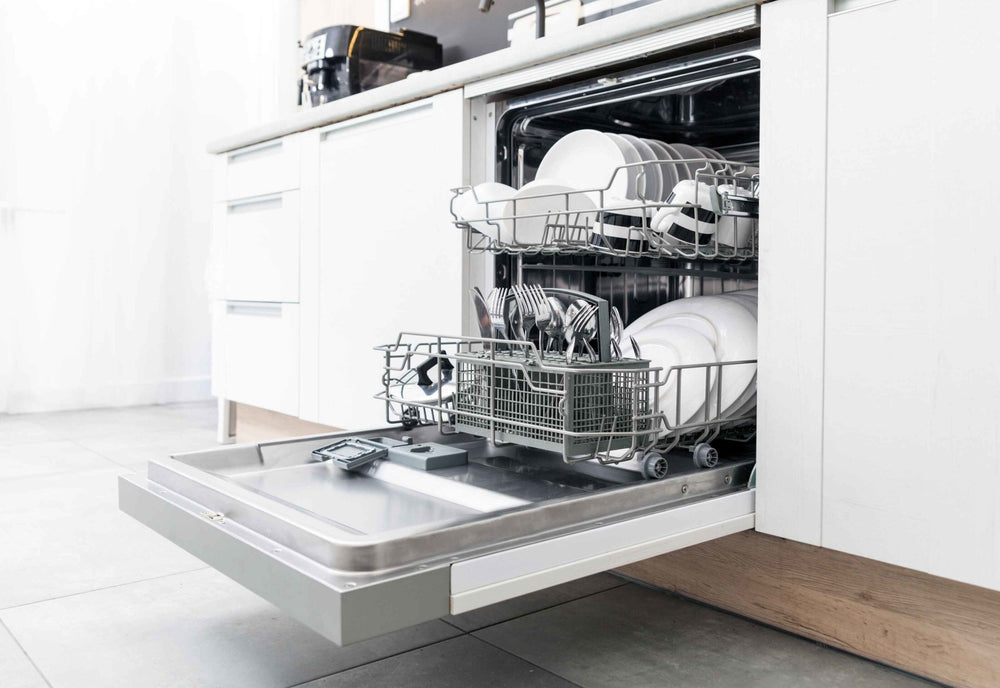
Before we get into the details, however, it's important to note that dishwasher water consumption can vary from model to model. Modern dishwashers are generally more efficient and economical than older models. It's advisable to consult the manufacturer's information to determine the exact consumption of your chosen appliance.
On average, a dishwasher uses about 10 to 15 liters of water per wash cycle. This value can vary depending on the program, load, and efficiency class. Modern dishwashers are equipped with sensors that detect the degree of soiling of the dishes and adjust water consumption accordingly. This ensures that only as much water as necessary is used.
Dishwasher programs vary in their water consumption. Eco programs are generally the most economical, as they use a lower water temperature and run longer to save energy. Other programs, such as intensive or quick programs, may require more water to thoroughly clean heavily soiled dishes or to wash dishes in a shorter time.
Another important factor influencing water consumption is the dishwasher's load. It is more efficient and economical to fully load the dishwasher rather than running it half full. A fully loaded dishwasher makes better use of the available space and reduces the number of necessary wash cycles. If the dishes are heavily soiled, it may be advisable to remove large food residue before washing to achieve optimal cleaning results and reduce water consumption.
The water hardness in your area can also affect your dishwasher's water consumption. In areas with hard water, more water may be needed to achieve adequate cleaning results. Using water softeners or special dishwashing detergents can help prevent limescale buildup and optimize water consumption.
To minimize the overall water consumption of a dishwasher, there are a few tips you can follow:
-
Use the Eco program: If it is not absolutely necessary, choose the most economical program to save water and energy.
-
Full load: Fully load the dishwasher before turning it on to maximize space and reduce the number of wash cycles.
-
Pre-clean: Remove large food residue from plates and cutlery for better cleaning performance and to minimize water consumption.
-
Check water hardness: Find out about the water hardness in your area and adjust the use of water softeners or special dishwashing detergents if necessary.
-
Energy-saving mode: Many dishwashers have an energy-saving mode that further reduces water consumption and program duration. Use this feature if it's available.
It's important to note that dishwashers typically use significantly less water than manual dishwashing. Handwashing can easily consume 20 liters or more. Therefore, a dishwasher can be an efficient and environmentally friendly option for reducing water consumption.
In summary, a dishwasher uses approximately 10 to 15 liters of water per wash cycle, depending on the model, program, and load. By selecting the right program, loading the dishes fully, and pre-cleaning the dishes, water consumption and efficiency can be further optimized. A dishwasher is generally a more economical and environmentally friendly choice than manual dishwashing, which often uses more water.
More Home Stories

Test: Kitchen Organizer 2026: The high-quality sink organizer you've been wishing for for a long time

Why over 80,000 people already buy their kitchen towels from nordesign
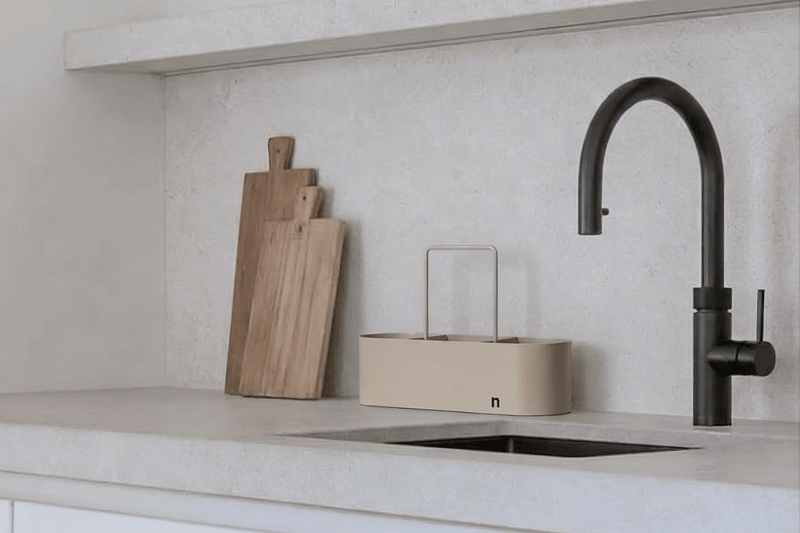
Kitchen Organizer 2026: The high-quality sink organizer you've been wishing for for a long time
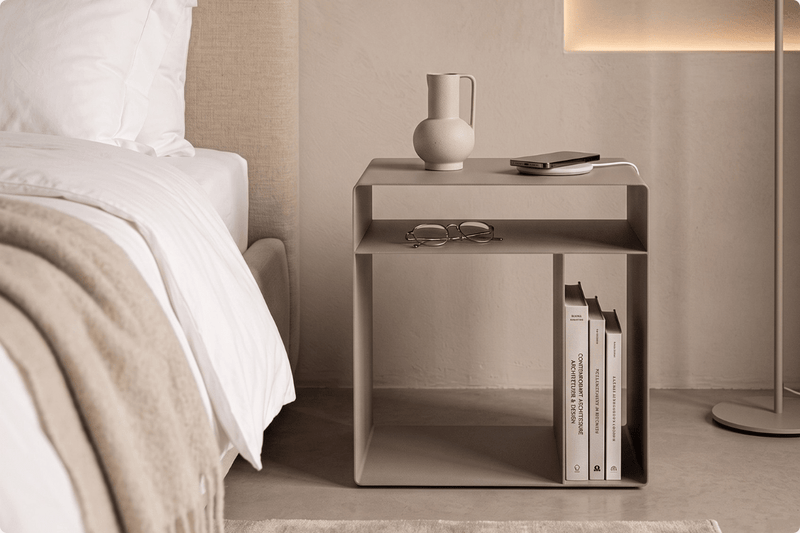
The perfect gift for women who already have everything
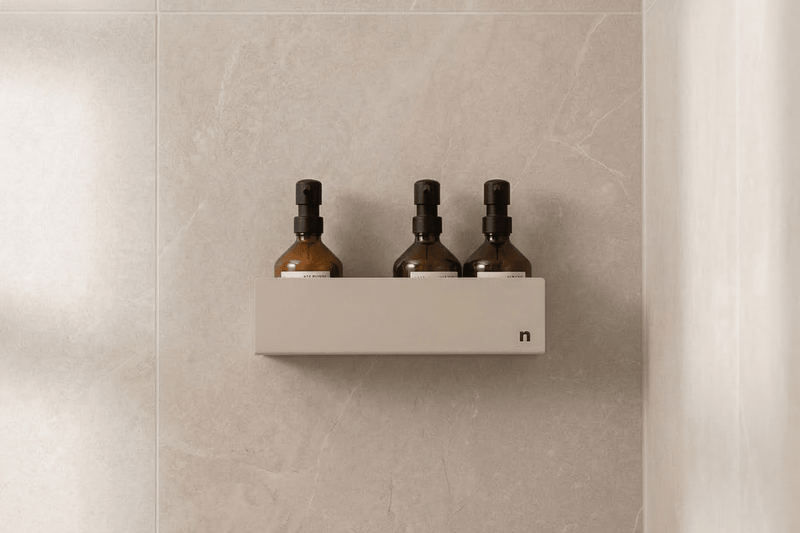
Shower caddy without drilling: What really holds – and what doesn't

More order, less stress: spring cleaning made easy

Scandinavian design meets functionality: How to design your bathroom with nordesign